


Where Many Paths Lead
Updated: Jun 20

They would have worn what the land allowed - wool against the cold, worn boots on rough ground, clothing shaped by weather more than choice. Their food was simple, taken from what could be grown gathered or caught - bread, broth, fish and whatever the seasons would give. They endured long journey's, uncertain paths and the quiet weight of change, carrying little more than what they could hold ... and what they could not leave behind.

Across the generations, our ancestors carried more than names and places—they carried experience. Events such as the Great Irish Famine shaped lives in ways that reached beyond their time.
Modern science, through the study of epigenetics, suggests that extreme hardship can influence how the body responds to stress, and that some of these responses may be passed from one generation to the next.
This does not mean we inherit the trauma itself, but rather a subtle sensitivity—an echo of survival. Alongside this, something equally important has been passed down: resilience, endurance, and the ability to rebuild.
Our roots are not only marked by what was endured, but by the strength that carried people forward—shaping who we are, while never defining who we must become.
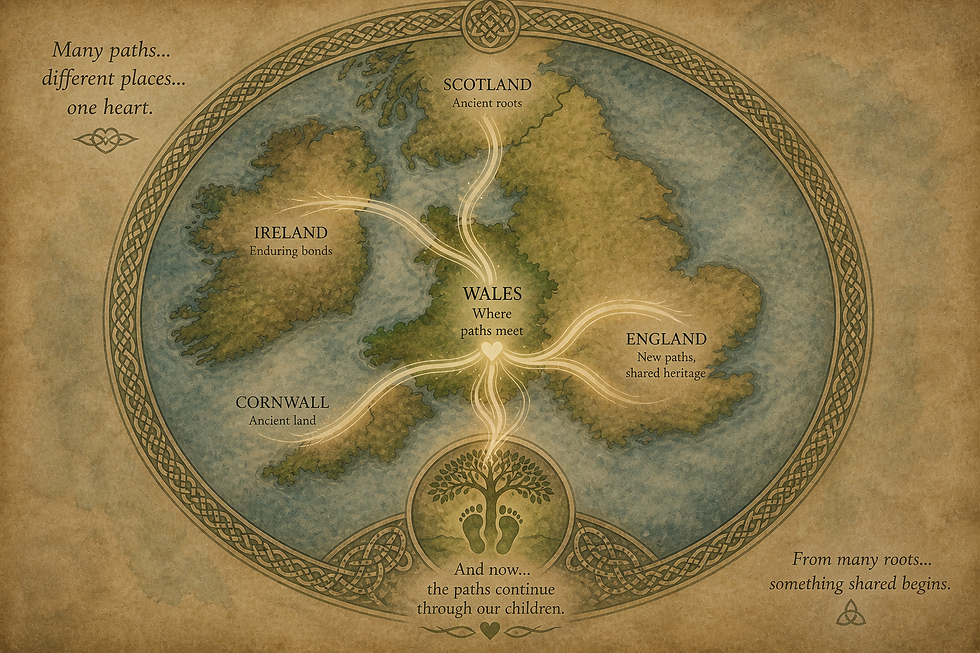
Extreme events like the Great Irish Famine didn’t just affect people in the moment—they could also influence how the body responds to stress across generations.
This idea comes from a field called epigenetics.
🧬 What epigenetics means (plain English)
Your DNA doesn’t change—but how it behaves can.
Think of it like this:
Genes are the instructions
Epigenetics is how those instructions are switched on or off
⚡ What trauma does
During extreme hardship (like famine, fear, or loss), the body adapts to survive:
Stress systems become more active
The body becomes more alert to danger
Certain genes linked to survival are “turned up”
These changes help people cope in the moment.
🔄 How it may pass down
Some of these changes can be passed to children, meaning they may:
Respond more strongly to stress
Be more sensitive to emotional or environmental changes
But they do not inherit the trauma itself—only a possible change in how their body reacts.
This effect is usually limited to a few generations
It is not guaranteed
It does not define a person’s life or emotions
Upbringing, environment, and personal experiences are still the strongest influences.
While history leaves its mark, it does not determine the future. The same generations that endured hardship also passed down resilience, creativity, and strength.

Comments